...OH, ONE MORE THING - PLEASE BOOKMARK US & VISIT DAILY!
By: Jamie Penick, MMATorch Editor-in-Chief
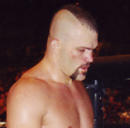
The career of Chuck "The Iceman" Liddell, in all estimation, came to an end on Saturday night in Vancouver at UFC 115. In this five part series, we'll take a look back at one of the greatest light heavyweight fighters in the sport's young history.
Chuck Liddell's path to fighting began at a young age, studying karate at the age of 12 and wrestling up through high school and college. A captain of his high school team, Liddell moved on to become a D-1 wrestler at Cal Poly University in San Luis Obispo, Calif. After graduating in 1995, Liddell began kickboxing, eventually joining The Pit and coming under the tutelage of longtime trainer John Hackleman.
Liddell found success kickboxing for a few years before making his UFC, and subsequently MMA debut at UFC 17, winning a decision over Noe Hernandez. He fought a much smaller fighter in Jose "Pele" Landi-Lyons in his second fight, notching a decision after 30 minutes of action. This was impressive as Lyons was the favorite, entering the fight with a 13-2 record, with all of his wins coming by stoppage. But Liddell outstruck the Brazilian Jiu Jitsu black belt in the fight and earned the nod.
Liddell returned to the UFC in March of 1999, tasting defeat for the first time when he was submitted by Jeremy Horn. He put together four straight victories over the next two years, racking off three straight stoppage victories before defeating Jeff Monson by submission in December of 2000.
The next stretch of fights for Liddell, from May of 2001 through November of 2002, brought him the wins that created his legend in the UFC.
First up were back to back knockouts of Kevin Randleman and Guy Mezger. While hindsight would suggest that the wins are perhaps not as impressive as they seemed, the fact of the matter is, at the time, both were still considered good fighters and dangerous opponents for anyone.
Randleman was 9-4 entering UFC 31, and was making his debut at light heavyweight after losing the Heavyweight Title to Randy Couture. Liddell took him out in just 1:18, and later that month entered the Pride ring for the first time to face Mezger. He was dropped at one point in that fight, but he came back to finish the Lion's Den product and longtime MMA veteran in the second round.
The run to his first UFC Light Heavyweight Title shot came next, starting with a decision victory over Murilo Bustamante. This win is extremely significant as it marked the first time the Bustamante had been defeated. He dropped to middleweight after this loss and won the UFC Middleweight Championship by defeating Dave Menne. He also defended the belt once before leaving the UFC for Pride. Suffice it to say, the win over Bustamante meant something, even if Liddell couldn't finish him. He followed that up with decision wins over Amar Suloev and a very good Vitor Belfort.
The Belfort win, along with the head kick knockout of Renato "Babalu" Sobral months later, were the two most impressive of the 12-1 start to Liddell's career. When they met at UFC 37.5 in June of 2002, Belfort was making his return to the UFC for the first time in three and a half years after a 4-1 stint in Pride. His two losses at that point had come to Randy Couture and Kazushi Sakuraba, and Liddell bested him through three rounds in a tough fight for both men.
He finally got his first title shot after his highlight reel head kick knockout of Babalu in November of that year, a finish made all the more impressive by the fact that Babalu's 20-4 record to that point featured only decision losses to Randleman, Fedor Emelianenko, Valentijn Overeem and Dan Henderson.
The trilogy between Randy Couture and Chuck Liddell began in June of 2003, with Liddell coming in as a very game opponent for Couture in a bout to determine the Interim Light Heavyweight Champion. While Liddell would get the best of Couture twice in years later, their first time represented the first TKO loss of his career.
Dana White and the UFC then brought him over to Pride as their representative in the Pride Middleweight Grand Prix in 2003. He knocked out Alistair Overeem in the opening round before getting handled by Quinton "Rampage" Jackson in their semifinal bout.
Recovering from that loss, Liddell returned to the UFC the next April, finally getting his hands on Tito Ortiz, who had to that point found ways to not take a fight with "The Iceman." Liddell took Ortiz out by TKO with punches against the cage in the second round, getting back on track in the division against the former champion and handing him the first TKO loss of his career.
Liddell picked up one more win in 2004, defeating Vernon White by TKO in the first round. After that victory, Liddell agreed to coach opposite Randy Couture on the first season of The Ultimate Fighter. Unbeknownst to anyone, Liddell was about to lead the UFC, and the sport of mixed martial arts, into a completely new era; and his time as "The Face of MMA" was about to begin.
TOMORROW: Chuck Liddell's Title reign cements his legacy
DON'T GO YET... WE SUGGEST THESE MMATORCH ARTICLES, TOO!
Jamie Penick, editor-in-chief
(mmatorcheditor@gmail.com)
STAFF COLUMNISTS: Shawn Ennis - Jason Amadi
Frank Hyden - Rich Hansen
Chris Park - Matt Pelkey
Interested in joining MMATorch's writing team? Send idea for a theme to your column (for Specialist section) or area of interest (i.e. TV Reporter) along with a sample of writing to mmatorch@gmail.com.